The clock is real
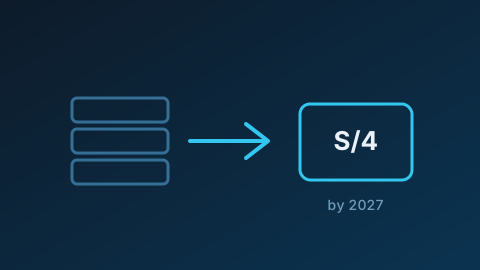
SAP has repeatedly confirmed that mainstream maintenance for ECC ends on 31 December 2027, with extended maintenance available to 2030 at additional cost. A full ECC-to-S/4HANA programme typically takes one to three years depending on landscape complexity, customisation depth and data quality. The arithmetic is simple: for most organisations, 2026 is the last comfortable moment to start.
Why S/4HANA testing is hard
An SAP landscape is not one application: it is dozens of business processes woven across modules (FI/CO, MM, SD and more), years of custom code, and a web of interfaces to non-SAP systems. A migration touches data models, transactions, authorisations and integrations at once. The risk isn't a single broken screen; it's an order-to-cash or procure-to-pay process that silently breaks three steps in.
Test by business risk, not by transaction
You cannot test everything, and you shouldn't try. The winning approach is risk-based: map the end-to-end business processes that matter most, prioritise them by financial and operational impact, and focus coverage there first. End-to-end process testing across modules, not isolated transaction checks, is what catches the failures that hurt.
Know what a change really affects
Before you ship a transport or an upgrade, change-impact analysis tells you which processes and objects are actually affected, so you test what changed instead of re-testing everything or, worse, missing something. This is where tools like Tricentis LiveCompare earn their keep on SAP programmes.
Automate the regression, mind the data
Migrations are not one test cycle; they are many. Reusable, maintainable automation (with Tricentis Tosca and Worksoft, wired into CI/CD) turns each regression round from weeks into a repeatable run; our SAP testing and Tosca automation pages show how we set that up. And don't underestimate data: migration and data-integrity testing makes sure records, balances and reports reconcile before and after the move.
How we approach it
We combine SAP process know-how with automation and risk-based coverage: define the goals, prioritise by risk, build maintainable assets, and validate the data and interfaces, so you de-risk the cut-over instead of hoping for it. If your S/4HANA move is on the horizon, the cheapest first step is a focused assessment of where your real risks and coverage gaps are.