The wrong question
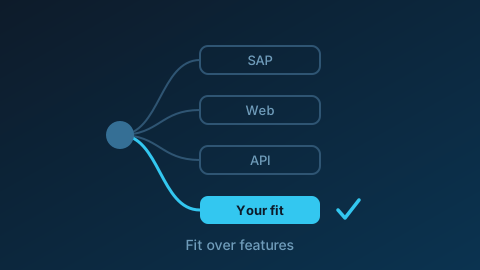
Tool rankings make good marketing and poor decisions. The expensive mistake is rarely picking a 'weaker' tool: it's picking a strong tool for someone else's landscape, then paying for the mismatch in maintenance for years. So start with your landscape, not with a feature list.
Start with your use case
- SAP-heavy enterprise landscape? Model-based tools built for packaged applications win here: Tricentis Tosca (with LiveCompare for change-impact analysis) or Worksoft. They understand SAP GUIs, Fiori and cross-module processes out of the box, and they survive SAP upgrades without a rewrite.
- RPA and testing under one roof? UiPath Test Suite automates business processes and tests them on the same platform. If your organisation already runs UiPath robots, the marginal cost of testing on the same stack is hard to beat.
- Web product, dev-centric team? Open source: Playwright or Cypress (fast, code-first, excellent CI/CD citizens). Selenium remains the veteran where you need the broadest browser and grid coverage.
- API-first architecture? Postman for functional API suites; Tosca OSV or Tricentis API Simulation when you need service virtualization: testing against systems that don't exist yet, or that charge per call.
- Mobile apps? Appium (open source) or the mobile engines of Tosca and Ranorex. And honest real-device coverage matters more than the framework choice.
Then apply three filters
- Team skills. A code-first tool in a team without developers produces shelfware; a no-code tool in a developer team produces workarounds. Match the tool to the people you have, and the people you can realistically hire.
- Total cost, not licence cost. Open source has no licence fee and real costs in framework building and maintenance. Commercial tools have licence fees and lower engineering overhead. Compare three-year total cost of ownership, not the invoice.
- CI/CD fit. If a tool can't run headless in your pipeline and report where your team already looks, its coverage is decorative. Check the integration story before the feature list.
Platform or portfolio?
To be clear: the platform strategy is legitimate. Tricentis and UiPath deliberately cover UI, API, mobile and more on one platform. Where a single platform genuinely fits your whole landscape (an SAP-centric organisation running everything through Tosca, or RPA plus testing consolidated on UiPath), consolidating is the right call: one skillset, one licence negotiation, one report. In practice, heterogeneous landscapes still end up hybrid: Tosca for the SAP core, Playwright for the customer-facing web (a dev team building your product won't live in a model-based enterprise tool), Postman in the API pipeline, connected through one test-management layer such as Xray or qTest. That's not indecision; it's the right tool per layer, with one place to see the truth.
Decide in 30 minutes
We're vendor-neutral: certified deep in Tricentis and UiPath, and equally at home in open source, so we recommend what fits, not what we sell. If you want a fast, independent read on your landscape, a QA Health Check answers the tool question as a by-product. Or simply start a conversation.