Why SAP is different
Teams that have automated web apps almost always underestimate SAP. The interfaces (SAP GUI, Fiori, often both mixed) behave differently from HTML frontends, business processes run across modules and roles (an order-to-cash flow touches SD, MM and FI), and every transport changes the system underneath the tests. Selector-based scripts that work on the web become a permanent construction site here.
What a model-based approach changes
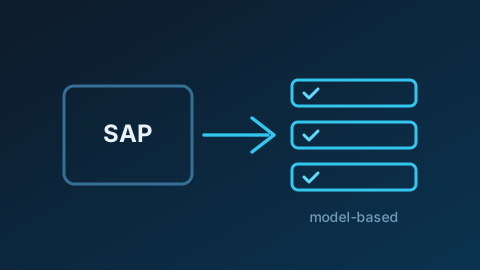
Tricentis Tosca is built for exactly this environment: instead of recording click paths, you model the application once in reusable modules; when a screen changes, you update one module instead of fifty scripts. The SAP engines understand SAP GUI and Fiori out of the box, and the modules survive upgrades far better than recorded flows. That is the core of model-based testing, and SAP landscapes are where it pays off most.
Test what a transport actually affects
The second SAP peculiarity is the pace of change. Running the full regression after every transport burns time; guessing skips risk. Change-impact analysis with LiveCompare shows which objects and processes a change actually touches and turns the regression into a focused, small selection. Combined with automated suites, that gives you a regression operation that keeps up with the release cadence.
The success factors from practice
- Prioritise by risk: start with the end-to-end processes with the biggest financial and operational impact, not the easiest transactions.
- Build modular: reusable modules and templates instead of throwaway recordings; that decides your maintenance cost in year two.
- Design test data in from day one: SAP tests need master data, postings and authorisations in a reproducible state.
- Integrate with the pipeline: runs that start automatically and report where the team already looks.
Our take
SAP test automation rarely fails because of the tool and often because of the setup: started too broad, built without modularity, test data forgotten. Set up properly, a Tosca automation carries you through upgrades, transports and even an S/4HANA migration. How we approach it lives on our SAP testing page; and if you want to know where your SAP regression stands today, a QA Health Check is the fastest way in.